Template:Profinet configurator ubuntu
Teltonika PROFINET Configurator Setup on Linux (Ubuntu)
This tutorial explains how to install and use the Teltonika PROFINET Configurator on Linux (Ubuntu) configure the {{{name}}} switch.
After assigning a suitable IP address and subnet mask, the WebUI of the {{{name}}} can be reached.
The {{{name}}} version with enabled PROFINET comes with the following factory settings:
- IP Address 0.0.0.0
- Netmask 255.255.255.0
- Gateway 0.0.0.0
Requirements
- Linux (Ubuntu 22.04) PC
- {{{name}}}
- Network cable connected from the PC to the {{{name}}} device
- Click Save as - Download Teltonika PROFINET Configurator installer
Step 1: Download the application
- Download the application from this wiki page and locate it in your Downloads folder.
- AppImage is a universal way of running aplications on most of the Linux distributions, but it requires a few additional steps before you can run it.
Step 2: Make the AppImage Executable
Before running the application on Ubuntu, the AppImage file must be given execution permission.
Open a terminal in the folder where the file is located and enter:
chmod +x Teltonika\ PROFINET\ Configurator_0.1.0_amd64.AppImage
Step 3: Run the AppImage
The application must be executed with administrator sudo rights, because it requires elevated permissions for network scanning and device detection.
Requirement: Linux (Ubuntu 22.04) PC
Use the following command to run it:
sudo ./Teltonika\ PROFINET\ Configurator_0.1.0_amd64.AppImage
If you encounter an error such as **dlopen(): error loading libfuse.so.2**, it means that the required FUSE library is missing.
To fix it, install the necessary package using:
sudo apt update
sudo apt install libfuse2
After installing, run the AppImage again with sudo:
sudo ./Teltonika\ PROFINET\ Configurator_0.1.0_amd64.AppImage
Step 4: Application Interface
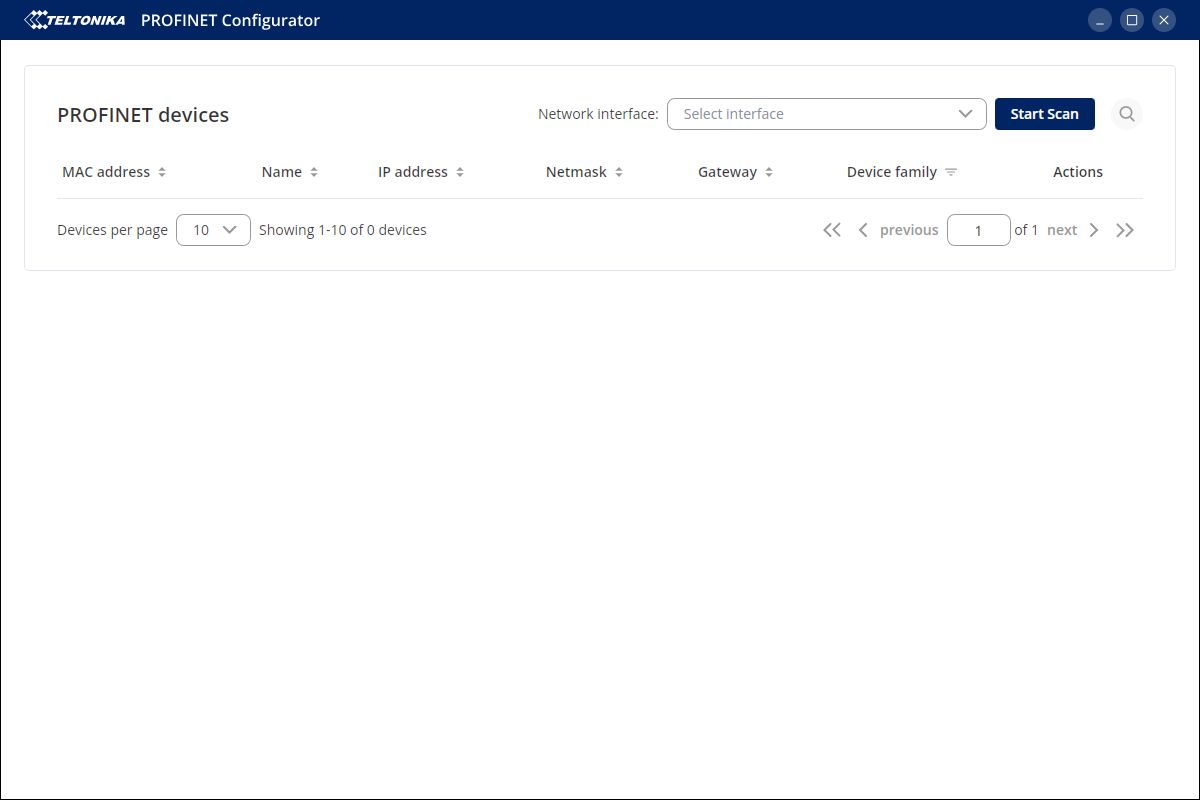
After launching with admin rights, the application will open successfully.
ℹ️ The images show TSW202 because its interface and configuration process are identical to other PROFINET-supported devices, including the one used in this tutorial. This makes the instructions fully applicable across models.
Step 6: Select Network Interface
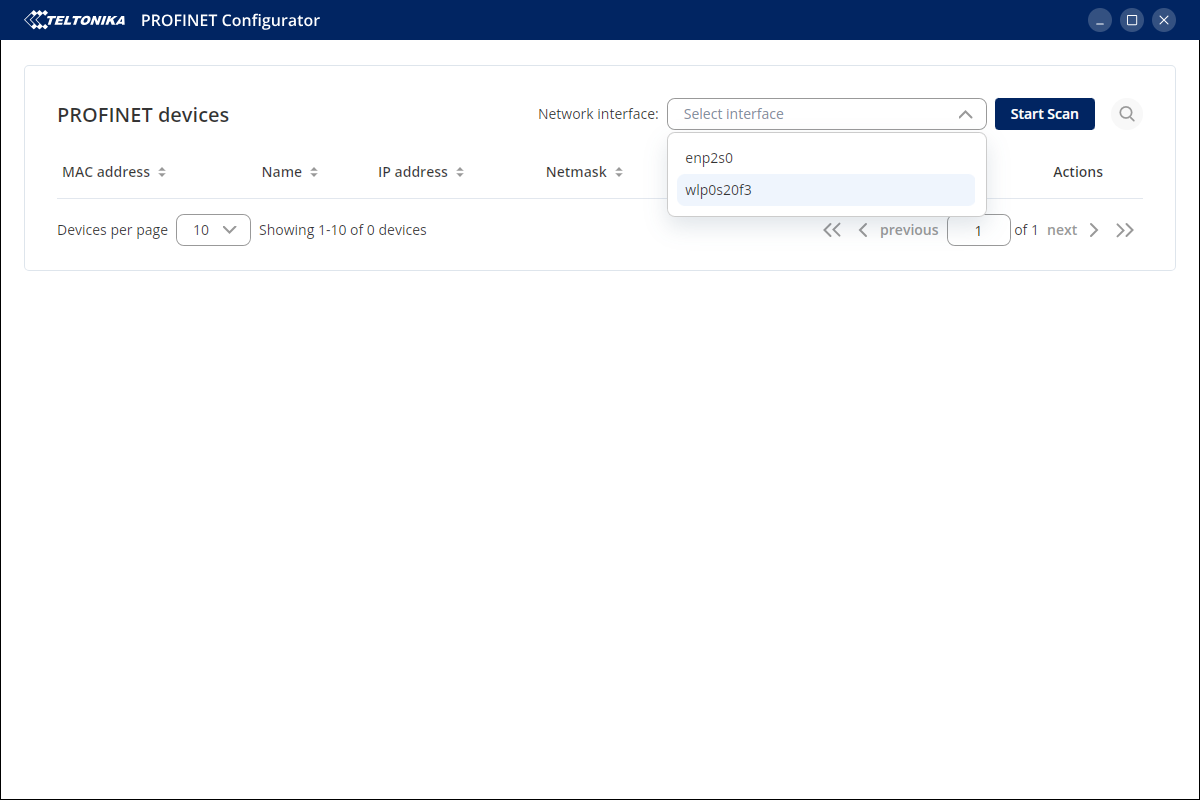
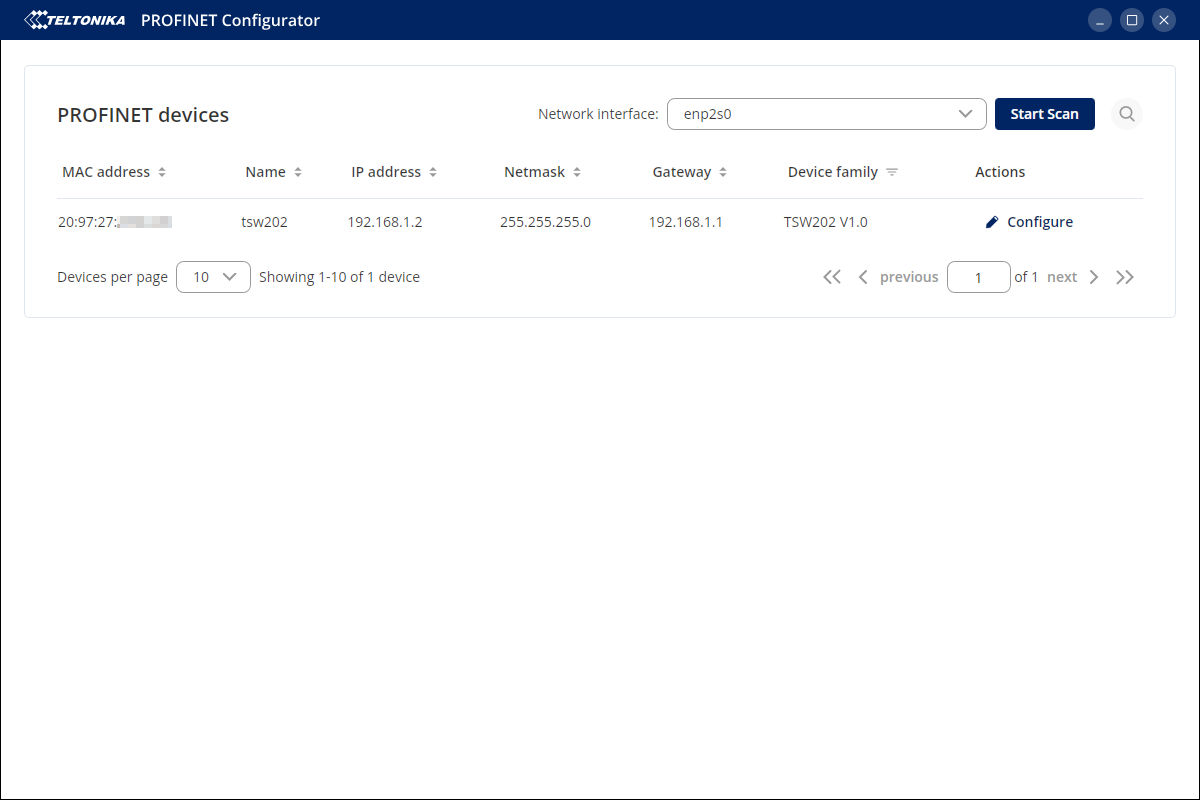
From the drop-down list, select the correct network adapter connected to the {{{name}}}, then press Start Scan.
Step 7: Configure {{{name}}}
The connected device ({{{name}}}) will appear in the list.
Click Configure to assign the name, IP address, netmask, and gateway.

Enter the desired configuration and press Save & Apply.

Step 8: Confirm Device Configuration
After saving, a confirmation message will appear.
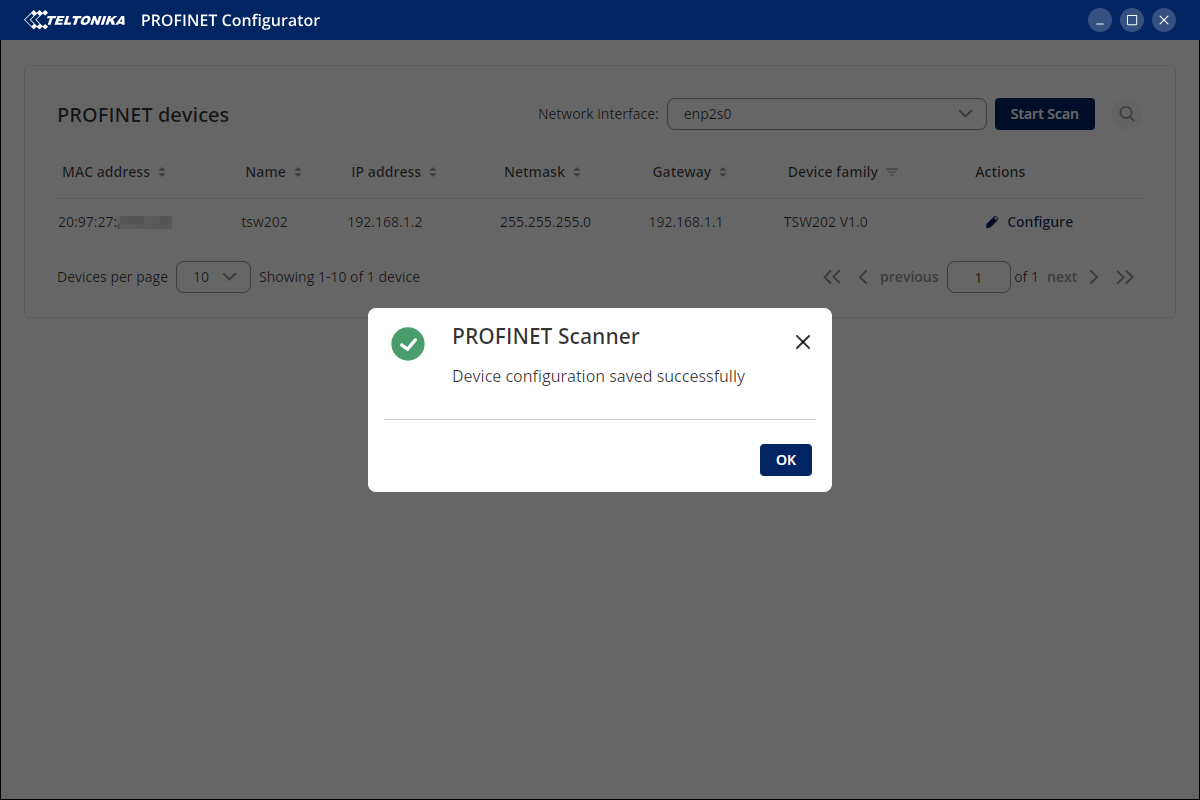
The {{{name}}} will now be listed with its new IP configuration.
Step 9: Access the WebUI
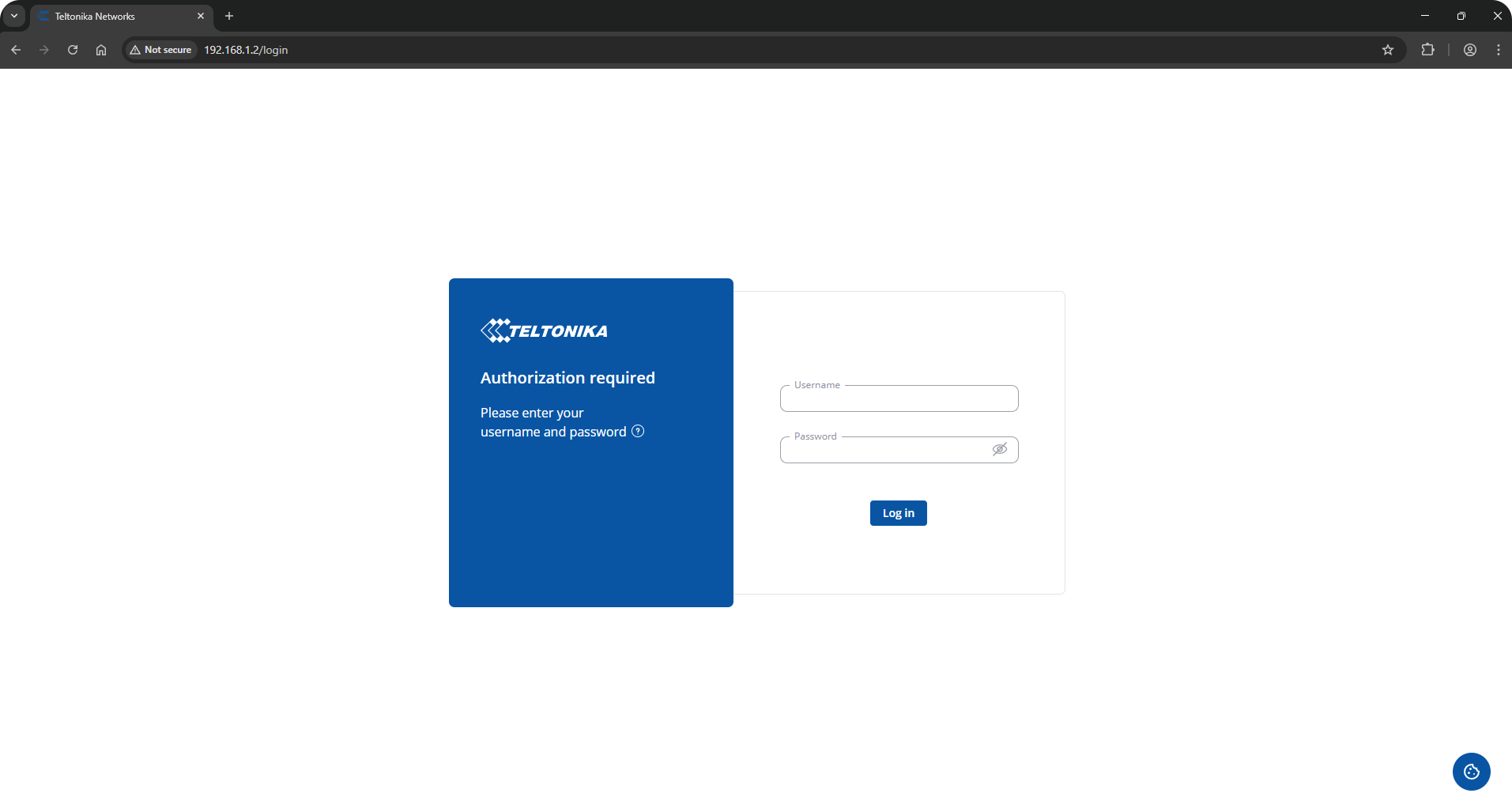
Open a browser and enter the assigned IP address (e.g., 192.168.1.5). The {{{name}}} WebUI login screen will appear.
Log in using your {{{name}}} device credentials. You will find the username and password are located on your device.